Contact Zones
Pamela Breda, Victoria Keddie, Sajan Mani
17. Mai–28. Juli 2024
Initiiert von: Max-Planck-Institut für empirische Ästhetik
Grüneburgweg 14 60322 Frankfurt am Main
Verantwortlich für das Programm: Eike Walkenhorst
In Kooperation mit: Museum Angewandte Kunst
Schaumainkai 17, 60594 Frankfurt am Main
Artists in Residence:
Sajan Mani (März–Juni 2022)
Pamela Breda (September–Dezember 2022)
Victoria Keddie (März–Juni 2023)
Kurator: Eike Walkenhorst
Deutsch / English
Die Ausstellung
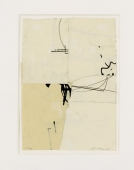
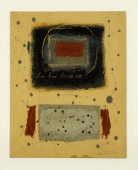
Mit Contact Zones – Pamela Breda, Victoria Keddie, Sajan Mani kooperiert das Max-Planck-Institut für empirische Ästhetik (MPIEA) zum zweiten Mal mit dem Museum Angewandte Kunst. Ausgangspunkt für das gemeinsame Ausstellungsprojekt ist das Artist-in-Residence-Programm INHABIT, in dessen Rahmen pro Jahr zwei Gastkünstler:innen unterschiedlicher künstlerischer Disziplinen für vier Monate im Dialog und Austausch mit den Wissenschaftler:innen des MPIEA arbeiten. Die Ausstellung der dritten und vierten Ausgabe von INHABIT zeigt die künstlerischen Arbeiten von Pamela Breda, Victoria Keddie und Sajan Mani, die während ihrer jeweiligen Residencies und im Umfeld des Forschungsinstituts entstanden sind.
Der Titel Contact Zones verweist auf den Umgang mit unterschiedlichen Kulturen des Wissens und die Herausforderung, einen Dialog zwischen dem künstlerischen und wissenschaftlichen Feld zu entspinnen und eine gemeinsame Sprache und Anknüpfungspunkte zu formulieren. Beschreibt der Begriff ‚contact zone“ in den Kulturwissenschaften soziale Räume, in denen Kulturen aufeinandertreffen, aufeinanderprallen und miteinander ringen, bezieht er sich im Kontext des Artist-in Residence-Programms auf den Raum der Interaktion zwischen Kunst und Wissenschaft. Als Format, das konzeptionell offen gestaltet ist, ist jede Residence-Edition in ihren Themen, Fragestellungen und Medien durch die jeweiligen Gastkünstler:innen bestimmt.
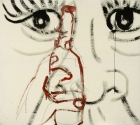
Pamela Breda entwirft in ihrer filmischen Arbeit ein Zukunftsszenario, in dem künstliche Intelligenz in einem fortgeschritten Stadium die Grenzen zwischen menschlichen und maschinellen Akteuren verwischt und uns auf poetische Weise an die Herausforderungen menschlicher Beziehungen und Interaktionen mit KI-Systemen heranführt.
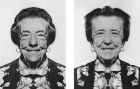
Victoria Keddie beschäftigt sich mit der ständigen Veränderung der gesprochenen Sprache und widmet sich in einer multimedialen und raumgreifenden Installation der Erkundung der auditiven und rhythmischen Nuancen phonetischer Ausdrücke.
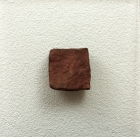
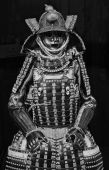
Sajan Mani arbeitet entlang seiner Biografie mit der Geschichte der Dalits und der Kolonialgeschichte Keralas und entwirft ausgehend von kolonialen Sammlungsbeständen eine alternative Erzählung, die dem Schweigen und der Unterdrückung seiner Vorfahren eine andere Sichtbarkeit entgegengesetzt.
Alle Künstler:innen haben während ihrer Residency ganz unterschiedlich gearbeitet und ihre Projekte sind Ausdruck vielfältiger Zugänge zum wissenschaftlichen Umfeld und nicht zuletzt durch Begegnungen, Dialoge und Kooperation informiert.
Max-Planck-Institut für empirische Asthetik
Das Max-Planck-Institut für empirische Ästhetik (MPIEA) wurde 2013 gegründet und erforscht, warum und wie Menschen Kunst erschaffen und sie aufführen, erleben und bewerten. Der Schwerpunkt des MPIEA liegt auf Musik, das Institut beschäftigt sich aber auch mit anderen zeitgebunden Kunst-Domänen wie Tanz oder Film. Im Fokus der Forschung stehen die psychologischen, biologischen und genetischen Prozesse, die der Produktion und Wahrnehmung von Kunst zugrunde liegen, sowie ihre Wechselwirkung mit den kulturellen, sozialen und historischen Faktoren ästhetischer Praktiken und Diskurse.
Das Institut steht in der Tradition von Gustav Theodor Fechner, der das Konzept einer grundlegenden, empirischen bzw. experimentellen Ästhetik in den 1870er Jahren entwickelte, und von Daniel Berlyne, der dem psychologischen Teil dieses Forschungsfeldes in den 1970er Jahren entscheidende neue Impulse gab. Es verbindet dabei in einem interdisziplinären, empirischen Ansatz Geistes- und Naturwissenschaften. Die Methoden von Psychologie und Neurowissenschaften werden verknüpft mit den Expertisen, Methoden und Theorien der Musik- und Kunstwissenschaften, der Anthropologie und der Soziologie – immer mit Rückbindung an die Philosophie als Mutterdisziplin der Ästhetik. Dazu nutzen die Wissenschaftler:innen des Instituts in ihrem Forschungsalltag eine Vielzahl von Methoden: Sie beobachten Menschen in ihrem ästhetischen Alltagsverhalten, lassen Konzertbesucher:innen Fragebögen ausfüllen, interviewen Personen, bitten sie, zu trommeln, zu singen oder Klavier zu spielen, messen mit Sensoren physiologische Werte wie Gänsehaut, Herzrate, Atmung oder elektrische Hautleitfähigkeit oder nutzen moderne Methoden der Hirnforschung wie Elektroenzephalographie (EEG), Magnetresonanztomographie (MRT) und Magnetoenzephalographie (MEG), um nachzuvollziehen, wie ästhetische Wahrnehmungs- und Bewertungsprozesse im Gehirn ablaufen.
Materialsammlung
Die Materialsammlung positioniert sich in der Ausstellung als ein Ort des Diskurses und der Dokumentation. Sie erlaubt, ausgehend vom Artist-inResidence-Programm eines wissenschaftlichen Forschungsinstituts, einen Blick in den Kontext der künstlerischen Arbeiten von Pamela Breda, Victoria Keddie und Sajan Mani und ihrer Entstehung. In was für einer Institution haben die Gastkünstler:innen an der Kontaktzone zur akademischen Wissensproduktion gearbeitet? Wie stellt sich diese Institution selbst dar? Was für Arbeitsweisen haben die Künstler:innen ausprobiert? Mit was für Materialien und Formen haben sie gearbeitet? Wie haben sie sich im Verhältnis zur wissenschaftlichen Arbeit positioniert – und umgekehrt?
Im Zentrum dieser Sammlung steht somit die Auseinandersetzung mit Formen des künstlerischen Denkens und die Frage, wie Ideen im Geflecht von materiellen und konzeptionellen Arbeitsformen entstehen. Die Präsentationen zeigen ausschnitthaft auf, welche Prozesse des künstlerischen Schaffens für die tatsächliche Arbeit stattgefunden haben, und legen über Skizzen, Notizen, verworfene Entwürfe/Ideen und Dokumente von Kollaborationen offen, wie die Arbeiten ihre Form gefunden haben. Gleichzeitig geben die Materialien Aufschluss über die Kultur des Artistin-Residence-Programms – die Zugangsweisen, Herausforderungen, Inspirationen und Irritationen der Gastkünstler:innen während ihrer Zeit am Max-Planck-Institut für empirische Ästhetik. Eine Auswahl an Texten, die für die Künstler:innen in ihrer Arbeit wichtig waren und sind, bietet einen Einblick in ihren gedanklichen Kontext und legt theoretische Bezugspunkte offen.
Deutsch / English
The Exhibition
Contact Zones—Pamela Breda, Victoria Keddie, Sajan Mani is the second collaboration between the Max Planck Institute for Empirical Aesthetics (MPIEA) and the Museum Angewandte Kunst. The initiative for this joint exhibition came from INHABIT, the Institute’s artist-in-residence program, which hosts two guest artists from different artistic disciplines each year for four months to pursue their work in dialogue and exchange with the researchers. This exhibition for the third and fourth iteration of INHABIT presents the works of Pamela Breda, Victoria Keddie, and Sajan Mani created during their residencies in the context of a scientific research institute.
The title Contact Zones alludes to the interaction between different cultures of knowledge and the challenge of not only fostering a conversation between the arts and natural sciences, but also creating a common language and opportunities for dialogue. While in cultural studies the term “contact zone” describes a social space where cultures meet, clash, and grapple with each other, in the context of this residency program it refers to the space of interaction between the artistic and scientific fields. Without conceptual constraints, each iteration of INHABIT is entirely defined by the respective guest artists themselves in terms of the questions posed and the media employed.
In her film, Pamela Breda sketches a future scenario in which advanced artificial intelligence blurs the boundaries between human and machine actors, and poetically introduces us to the challenges of human relationships and interactions with AI systems.
Victoria Keddie focuses on the ongoing transformation of spoken language, exploring the auditory and rhythmic nuances of phonetic expression in a multimedia and expansive installation.
Sajan Mani works along his biography of Dalit history and the colonial history of Kerala, creating an alternative narrative based on colonial collections that counters the muteness and oppression of his ancestors with a different visibility.
All the artists have worked in very different ways during their residencies, and their projects are an expression of different approaches to the scientific environment and, not least, shaped by encounters, dialogues, and cooperation.
Max-Planck-Institute for Empirical Aesthetics
The Max Planck Institute for Empirical Aesthetics (MPIEA), founded in 2013, investigates why and how people create art and how they perform, experience, and evaluate it. The Institute’s focus is on music, but we also engage with other performing arts such as dance and film. The MPIEA explores the underlying genetic, biological, and psychological processes that underlie the production and perception of art, as well as their interaction with the cultural, social, and historical factors and functions of aesthetic practices and discourses.
The Institute stands in the tradition of Gustav Theodor Fechner, who developed the concepts of empirical and experimental aesthetics in the 1870s, and Daniel Berlyne, who gave decisive new impulses to the psychological part of this research field in the 1970s. It combines the humanities and natural sciences in an interdisciplinary, empirical approach. The methods of psychology and neuroscience are coupled with the expertise, methods, and theories from musicology, art history, anthropology, and sociology—with the connection back to philosophy as the mother discipline of aesthetics being an important part of the Institute’s research agenda. This is why the Institute’s scientists use a variety of methods in their dayto-day research: They observe people’s everyday aesthetic behavior; ask concert-goers to fill out questionnaires; interview individuals and ask them to drum, sing, or play the piano; they use sensors to measure subjects’ physiological parameters, such as goose bumps, heart rate, breathing, or electrical skin conductivity; and they use modern brain research methods, such as electroencephalography (EEG), magnetic resonance imaging (MRI), and magnetoencephalography (MEG) to understand how aesthetic perception and evaluation processes take place in the brain.
Collection of Materials
The collection of materials is positioned in the exhibition as a place of dialogue and documentation. It allows us to see the artistic environment in which Pamela Breda, Victoria Keddie, and Sajan Mani created their works in the context of a scientific research institute’s artist-in-residence program. In what kind of institution did these guest artists find themselves, working in the contact zone with academic knowledge production? What role did the institution itself play? What working methods did the artists experiment with? And what materials and forms did they employ? How did they position themselves with regard to scientific work—and, conversely, what positions did the scientists take vis-à-vis them?
The collection is thus centered around an engagement with forms of artistic thinking and the question of how ideas emerge from the interweaving of material and conceptual forms of the artwork. The presentations show, in excerpts and details, which artistic processes were involved in the production of the actual works. They also reveal how the works found their forms through sketches, notes, discarded drafts/ideas, and documents of collaborations. Moreover, the exhibition uncovers the culture of the artist in residence program—the approaches, challenges, inspirations, and frustrations experienced by the guest artists during their time at the Max Planck Institute for Empirical Aesthetics. A selection of texts that were and continue to be crucial for the artists as they worked, offers insights into their intellectual processes and reveals theoretical reference points.
artist-info.com Exhibition Id
https://www.artist-info.com/exhibition/MAK-Id390770




 Exhibition Announcements